A high Alpine ridgeline extending toward distant ranges.

Built in a day,
learned in a room.

Hackathons I have built at, events I have learned from, and the certificates I hold.

Hackathons

  1. Show & Tell: The Storybook that Listens

    Bringing story time to life

    Google

    Ahead of the Reactor x Google Hackathon, the term world model had me reaching for the dictionary. Had you told me it would result in me presenting on stage at Google… I would probably have thrown it at you. If you had then explained the nature of my demo, I would doubtless still be apoplectic.

    I’m Eleonora, this is Fiona, and together we’re Team Peter Rabbit.

    A good rule of thumb for any brave soul daring to register for their first hackathon, like my incredible teammate, Fiona Chow, is to work backwards from your demo. Even the most technically complex and scientifically groundbreaking submissions can be overshadowed by a clean, well-structured live demonstration of a simple product.

    Unfortunately, the only dictionary which does define world models was NVIDIAs Glossary, which describes them as neural networks that understand the physics and spatial properties of the real world. Seeing as I was preparing to tackle Reactor’s impressive world models, I did what any modern armchair techxpert would do, and asked Claude instead.

    Claude, as always, was wildly encouraging: on the day, I could build a physics trainer, which registers when the model deviates from real physics, or simulate a black hole, like in interstellar. The possibilities were endless, and the world (models) my oyster.

    However, sitting in the moodily lit conference room, at a round table with software developers, engineers and other highly intimidating, brilliant professionals, I came to reckon with my own limitations.
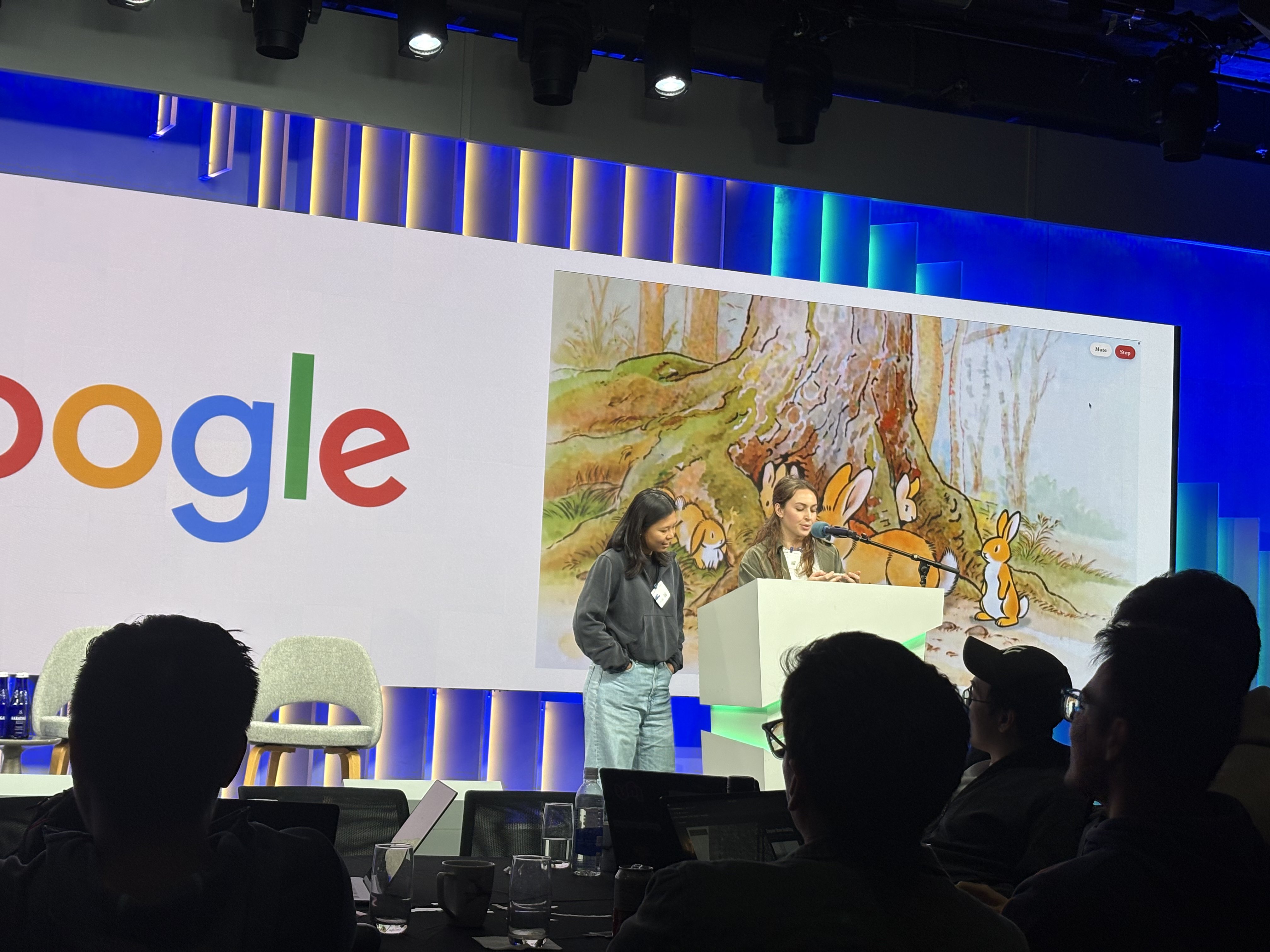
    While getting set up with Reactor and Google Gemini’s various tools, our table bustled with excited geniuses, ready to push the models at our disposal to their limits. I considered collaborating with Fiona on a robotics-facing project, or the physics-tool we sketched out. All throughout, my mind wandered back to my little siblings.

    I’ve been reading to them since they were born, well over a decade now. Even for the most tantalizingly popular works like Harry Potter, or Percy Jackson, our deal was always that we read the book together first. The notion is less homely and romantic than it sounds - like any siblings who are asked to share, our cozy reading hours often devolved into a lord of the flies-style affair regarding who got to see the picture first, what Dobby the House Elf really looks like and whispers of be quiet you idiot, I can’t hear what she is reading.

    If you’ve spent any meaningful time around children, you know that they have this crazy, beautiful imagination, and nowhere is that more apparent than during story time. We thought today was the perfect opportunity to help them bring what’s on the page to life. Now, if you could all pretend you’re five years old, this will be a lot more impressive.

    I managed to snag the accomplished, recently graduated Fiona Chow and persuade her to realize the idea with me. Our objective was to create something that the sleep-deprived parents and guardians of the world would actually use: simple, straightforward and intuitive.

    We built a deceptively minimalist storytelling aid. Gemini live asks you what you’re reading, then Gemini Flash 3.8 finds the pdf of your book and extracts the images and sentences. For every page, it prompts Reactor’s H3 Reference Turbotime model with the image and tells Gemini Live the text it should expect to hear.
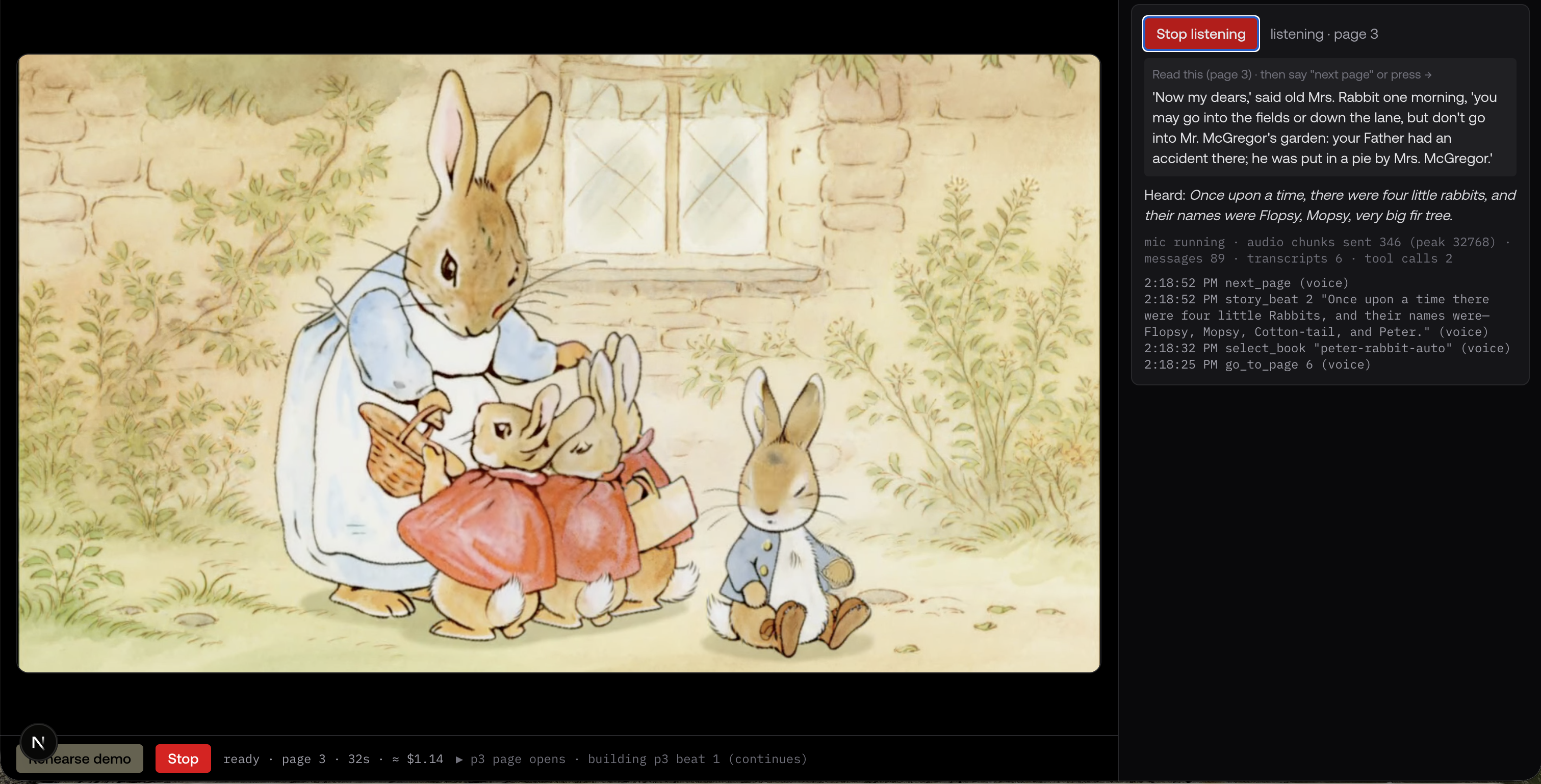
    Once you read the last few words on the page, the next is animated on your screen. The next page is built as you’re reading, so the transition is seamless. The Reactor model matches the animation style, but creates an engaging landscape and action sequence around the page.

    Given the unbridled imagination of children, Gemini Live also listens for special requests, like “Make it snow!” and retains the special effects across pages until you ask it to stop. For revisions and clarifications, you can just as easily tell it to “Go to to the previous/next page”.
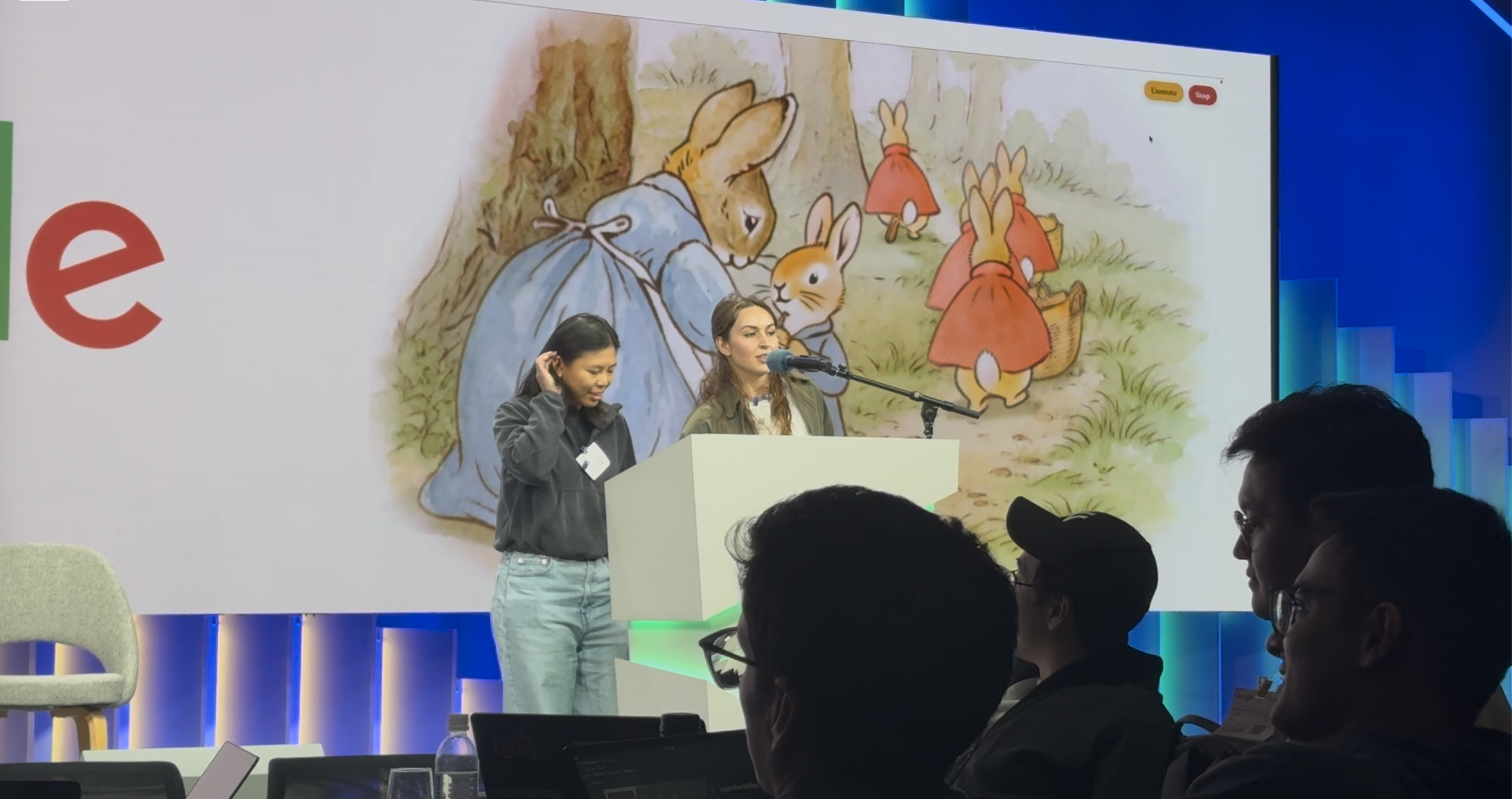
    There were three winners: best avatar use-case, best interactive narrative and judge’s choice. Team Peter Rabbit brought home the win for best interactive narrative (and a play station). I’m grateful for the encouraging words of the judges, the Reactor and Google team, and the ingenuity of Fiona, without whom Peter Rabbit would have stayed a 2D source of mischief.

    Tools
    Git and GitHub · Next.js · Vercel · World Models · JavaScript · TypeScript · Pattern-based extraction
    Team
    Fiona Chow
  2. Kiara: Your AI Agent has context. Why doesn’t your Lawyer?

    Lawyers can’t keep up with the fast-paced changes in startups and their legal ramifications. Founders ship first and litigate later. Kiara saves both sides valuable time and removes detective work from the equation.

    The Malin Chelsea, New York, NY

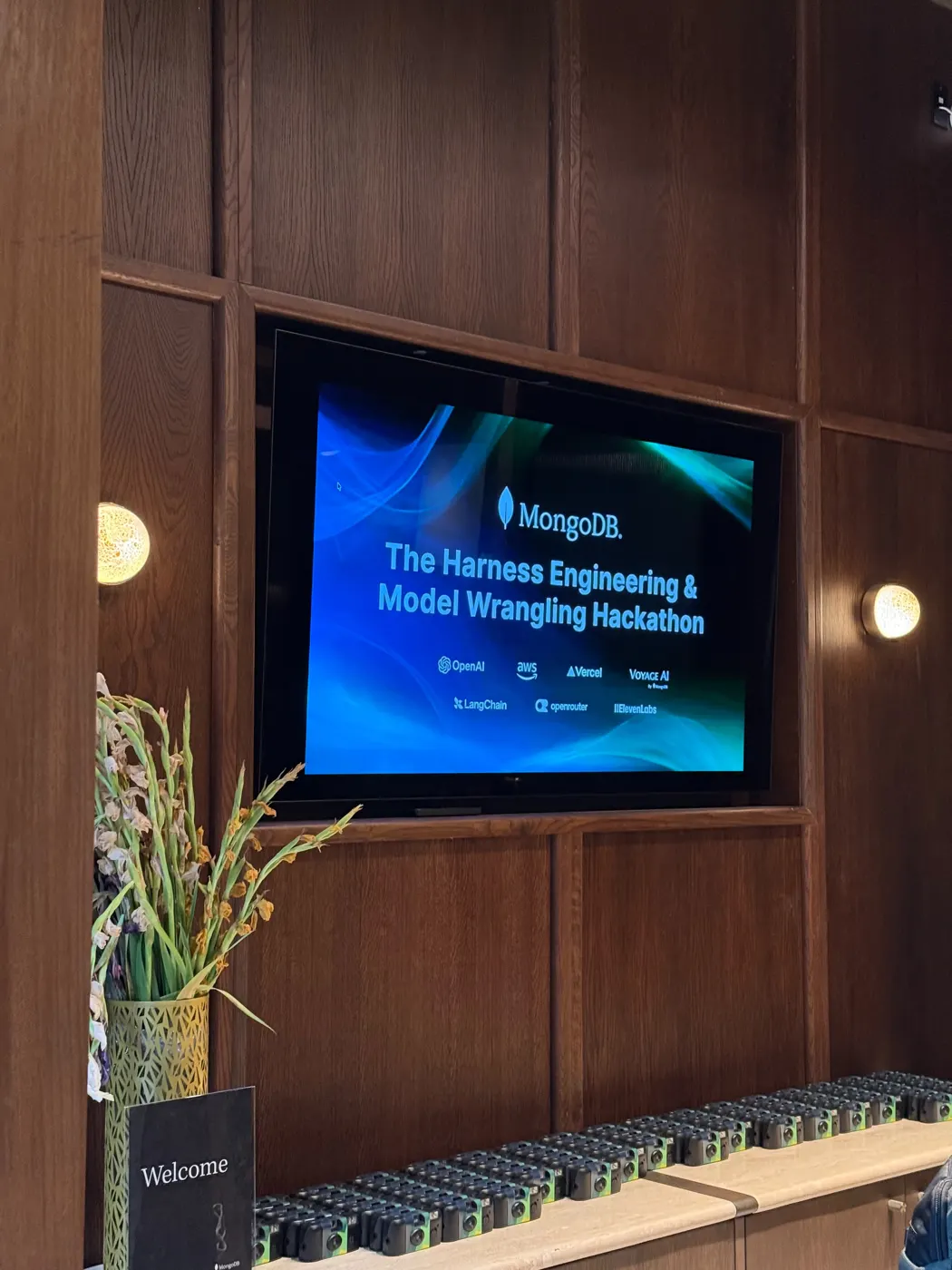
    A screen on a wood-panelled wall reading MongoDB, The Harness Engineering & Model Wrangling Hackathon. The analog cameras were put through their paces throughout the day.
    Welcome screen at The Malin.

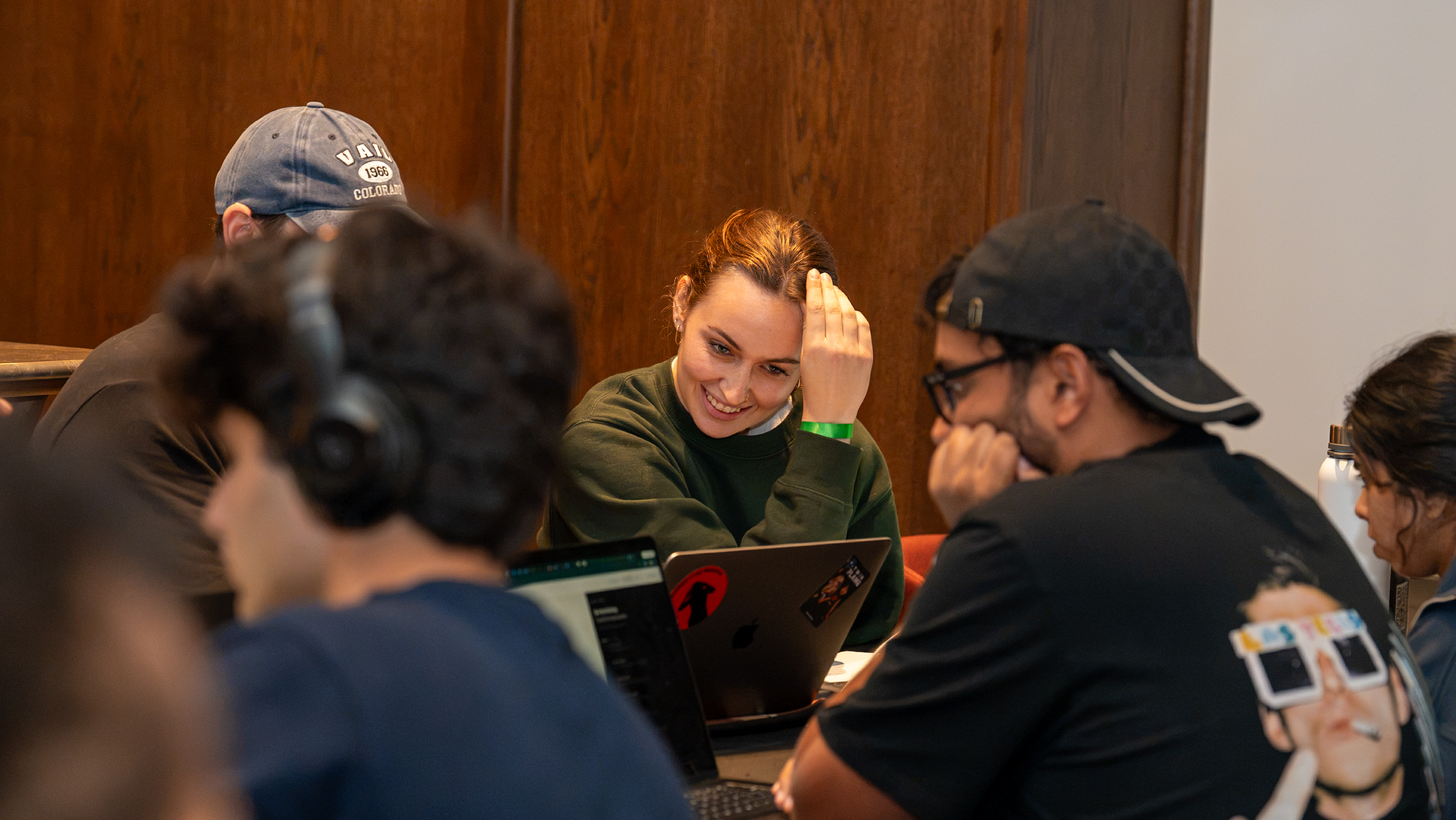
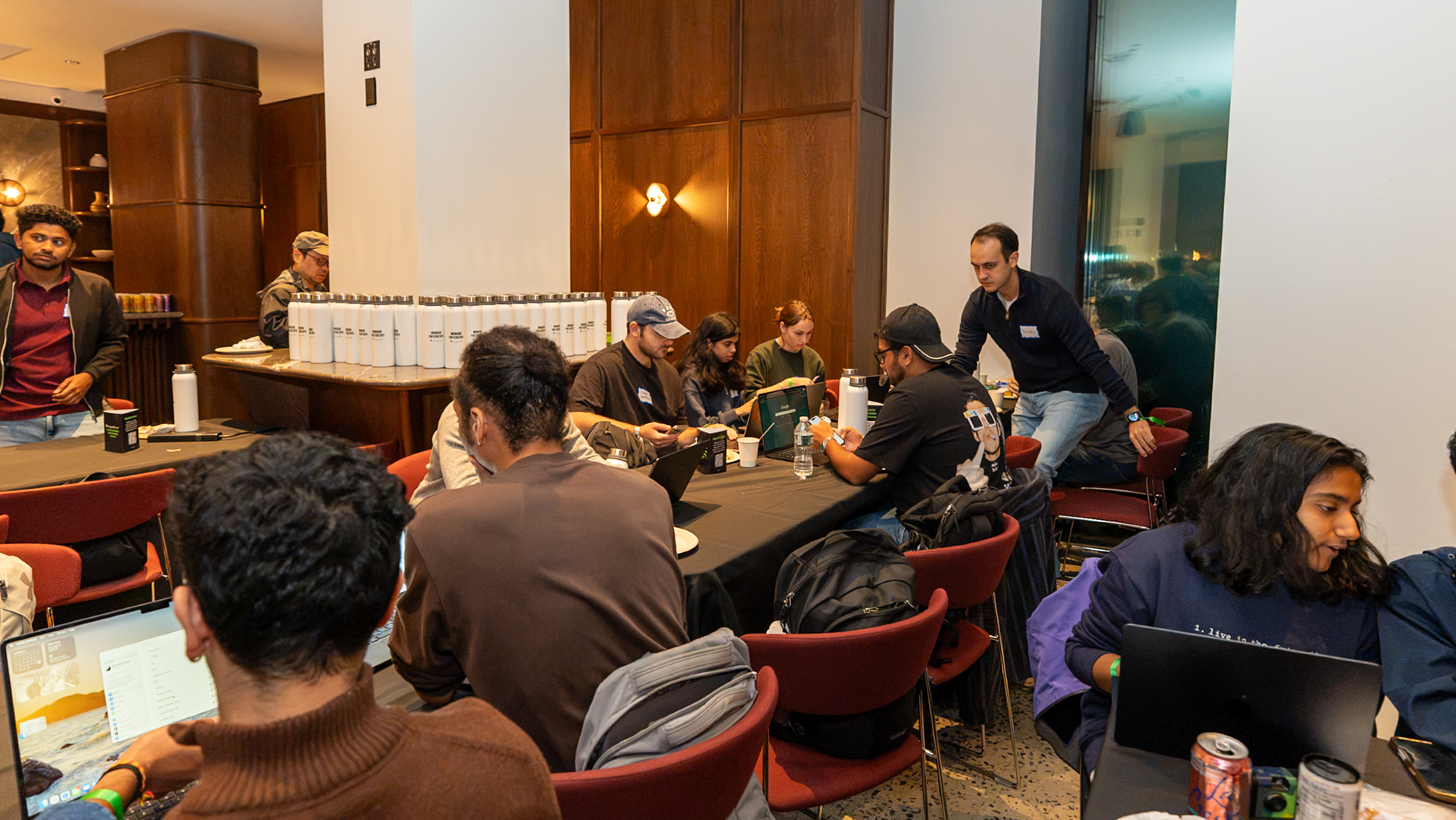
    A few days ahead of the hackathon, we began forming teams on the MongoDB discord. Jordan was one of the first people to rally hackers around his proposal, a bold Legal Tech initiative to align company documents with the current state of the company, and save billable hours by delivering the proposed revisions straight to the lawyers.

    Quip of the day: I’ve heard about Jason, but who is this Jeff everyone’s so excited about? (I still giggle at .json and Jev)

    We had learned about non-relational databases the previous week, and I busied myself with vector search tutorials in between classes, but I felt woefully unprepared to wrangle even the simplest of harnesses in Atlas. Nonetheless, I sent Jordan a message. An hour later, I was detailing my law background to him on a call. The next day, I met Aayush and Aishwarya, two brilliant engineers who formed the technical spine of our project.

    It was decided: we would build a self-improving harness, triggered by differences in customer location to review company policy, find the statute that the clause ties to and identify the corresponding statute in the customer’s jurisdiction. Then, it would pass through a validation loop and ultimately output a reviewed policy to a dashboard. There, the founder and lawyer would both be able to review, comment and approve, which in turn would feed back into the shape of the harness.

    So far, most of my Bachelor’s Thesis in law has been spent working out a way to turn law into maths, to the chagrin of almost every legal professional I’ve had the privilege of sounding my idea out to. I spent days pouring over New York’s fragmented data protection laws, and came to an unexpected conclusion. This could actually work.

    “Hi Jordan, it’s your lawyer. Time for your yearly policy review, catch me up?” “Sure. Well, we’ve pushed a few new features. We expanded a little, an-” “Wait. Tell me you didn’t expand to California?”

    To someone like me, laws had always been a series of if/elif/else statements and while loops. It surprised me that relating every piece of information about our fictional company, stored in a semi-structured database, could relate directly to the building blocks of Jordan’s actual privacy policy. I created a template for the minimum viable building blocks required by a US-based privacy policy, and extended it to the state of New York. From there, taking California’s more stringent CCPA into account just meant adding more blocks.

    We locked in. After a long day of building, we presented the judges with a three minute demo.

    “How did you know? We’ve had customers there for months now!” “Good god, it’s a miracle you haven’t been sued already! Get down to my office right now.

    We spent the following two hours anxiously waiting for the finalists to be announced. Despite some encouraging words from the judges, we were not among them. I was bursting with pride and awe at what we had accomplished, and my faith in the legitimacy of our idea has not been shaken, but as the six finalists presented, I couldn’t help but feel I was watching history in the making.

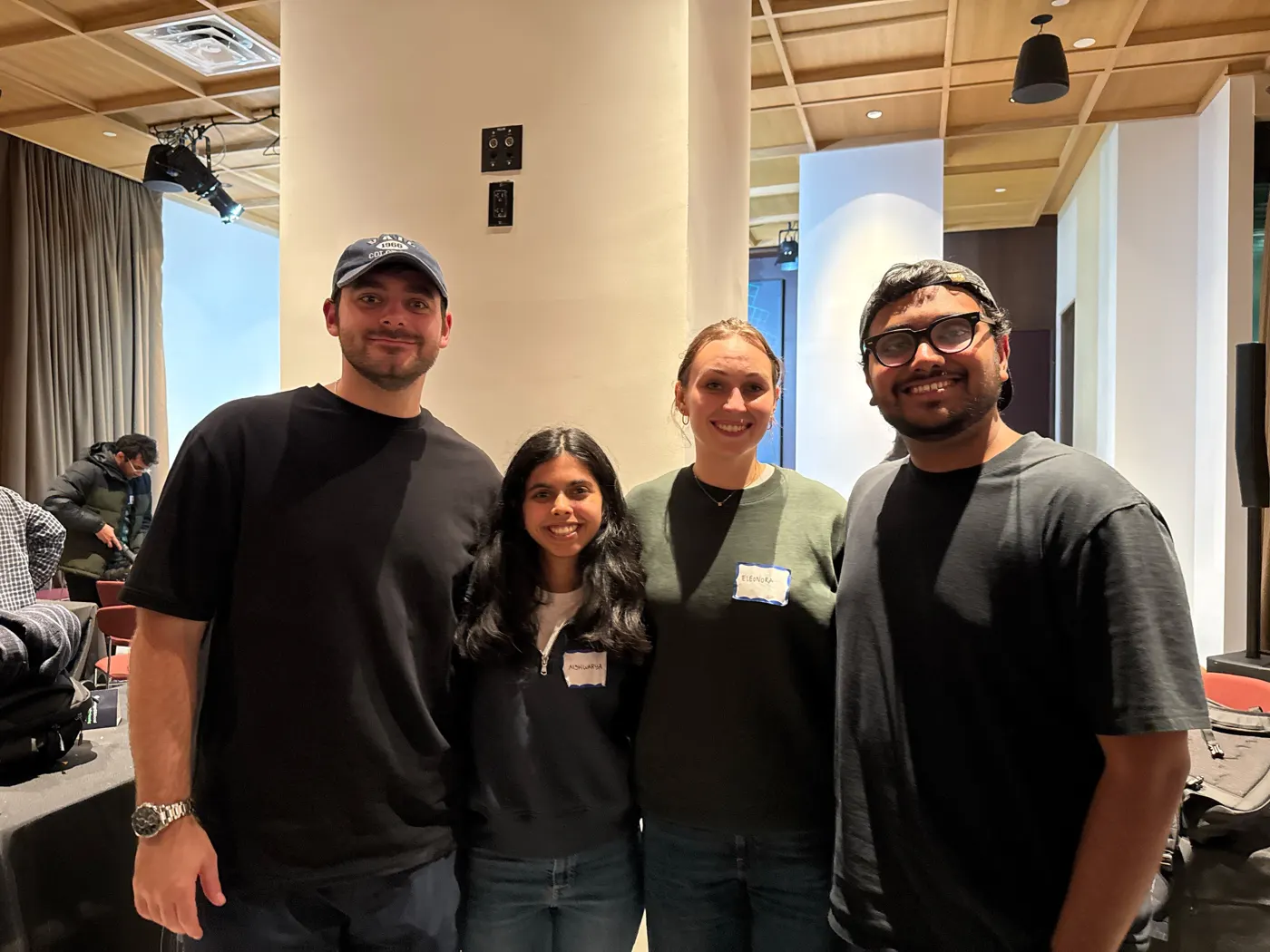
    Eleonora and three teammates smiling in the hackathon room.
    The Kiara team.

    I live for hackathons, because the NYC Tech Community is composed of the most genuine, heartfelt group of people I’ve ever had the pleasure of encountering. They are brilliant, creative problem-solvers and I count myself lucky to hack alongside them. I’m excited to tackle world modeling next, at the Reactor x Google Hackathon in two weeks.

    My part
    • Reduced complex, decentralised privacy laws to a set of building blocks for a bare-minimum contract
    • Expanded that minimum with synthetic company data, working out how every section of the contract relates to the others and creating a reproducible algorithm
    • Designing a workable validation loop, incorporating human feedback, web and vector searches to achieve recursive improvement
    Tools
    MongoDB Atlas · Next.js · TypeScript · OpenAI API · Vercel
    Team
    With Jordan Weintraub, Aayush Dani and Aishwarya Patil
    Ready to save some money? Try our Kiara prototype in your browser.Open the live app

    What I took awayData Engineering is a necessary crucible, every submission is only as good as it’s presentation (which requires time to practice) and there is nothing more rewarding or fun than doing challenging work with an incredible team.

  3. NVIDIA’s Supply Chain: Resilient Tin is Cheaper Tin

    Putting a price tag on resilience: how we demonstrated the profitability of an ethical, sustainable supply chain.

    New York, NY

    Staring down the barrel of the ‘Critical Minerals and Supply Chain Strategy’ track I picked for the Ethical Tech Colab’s Climate Resilience Hackathon, I had to admit that the subject was far out of my comfort zone. I called in for backup. Madeleine, a Global Business and Sustainability student, and Nicholas, my frequent collaborator and resident finance advisor, agreed to apply as well.

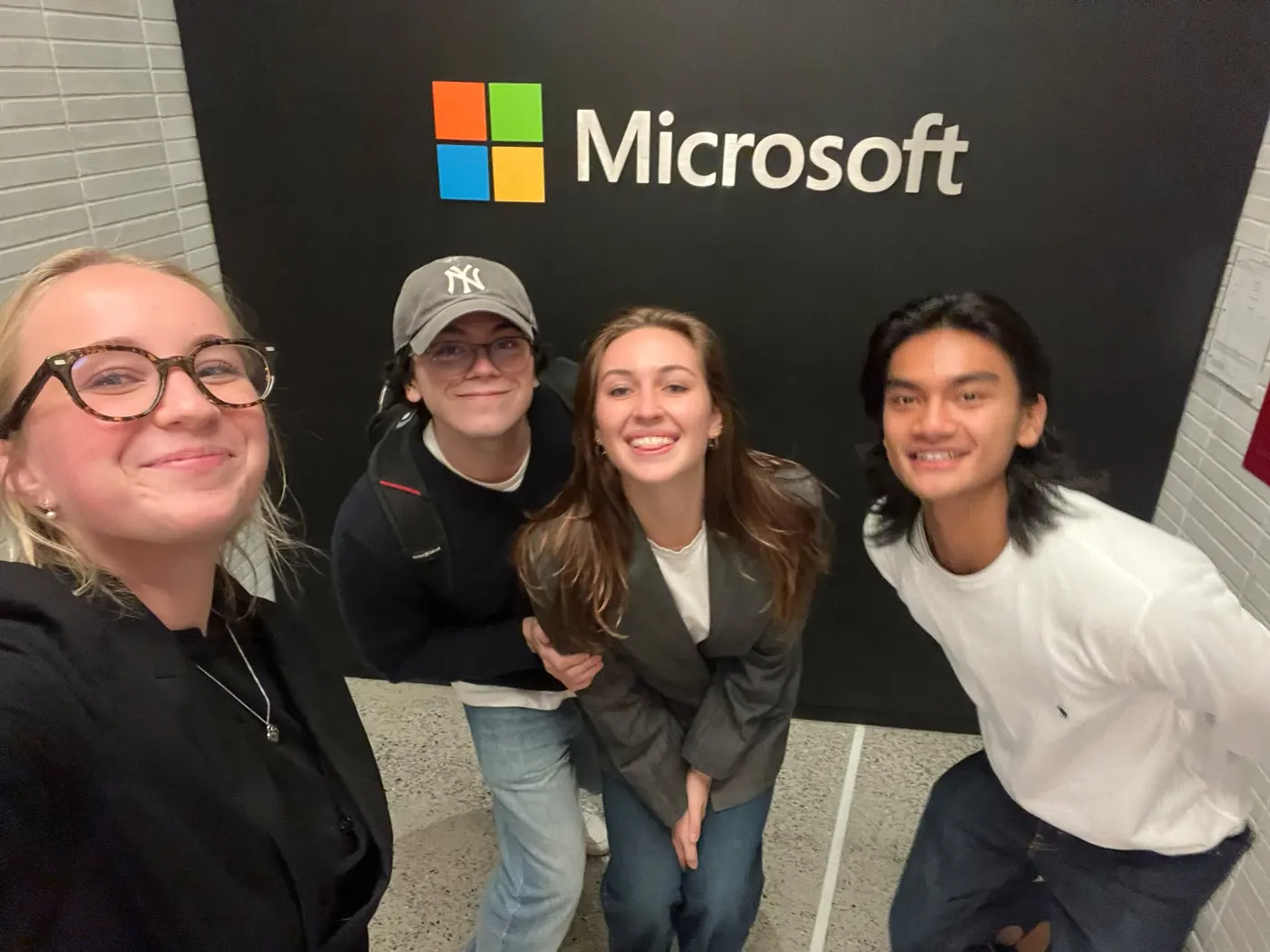
    A selfie of Eleonora and three teammates in front of a Microsoft logo.
    Part of the team, in front of the Microsoft wall.

    Every now and then, someone will express surprise at my preference for paper notebooks and gel pens. I’m of the firm belief that the more abstract one’s work is, the more one is drawn to ‘touching grass’ - or in this case, paper. I like being able to plan, draw out ideas and jot down notes as my teammates speak. There were six of us, as we found three more teammates on site, and the primary obstacle to a winning submission is always the lack of clear roles. Once we agreed on a clear plan and delimited jobs, we set to work.

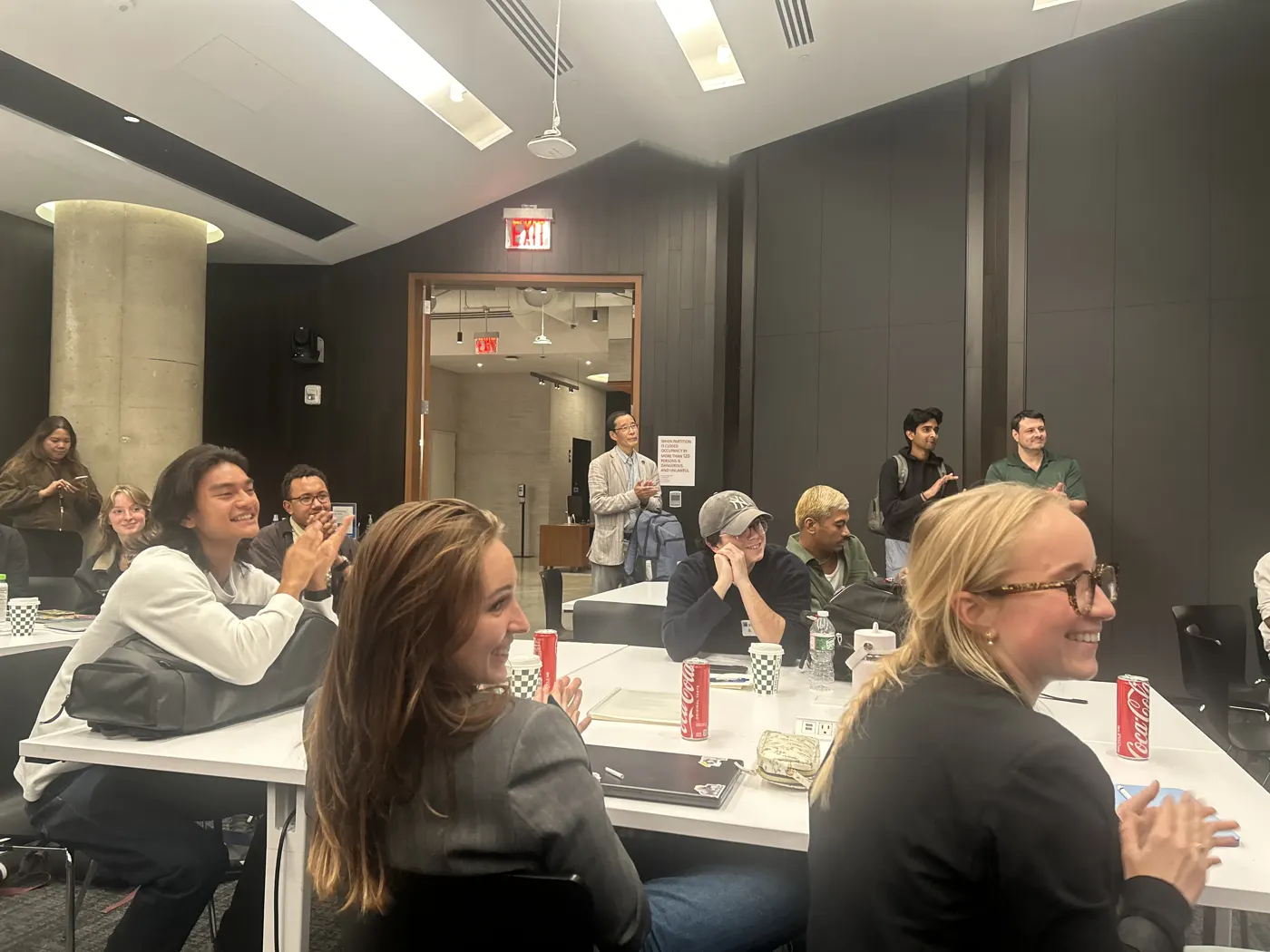
    The team and the audience smiling and applauding at their tables.
    The winners are announced.

    The team decided on NVIDIA as the subject of our project, and narrowed our mineral down to tin. With resources like tradeverifyid and sayari, we began working our way through five tiers of suppliers. The two finance students, Alex and Nicholas, explored the maths behind a resilience index for the facilities we identified. Madeleine explored the dynamics of the supply chain we unearthed, and helped them identify suitable, sustainable alternatives to facilities with lower scores. Our objective was simple: put a price tag on resilience.

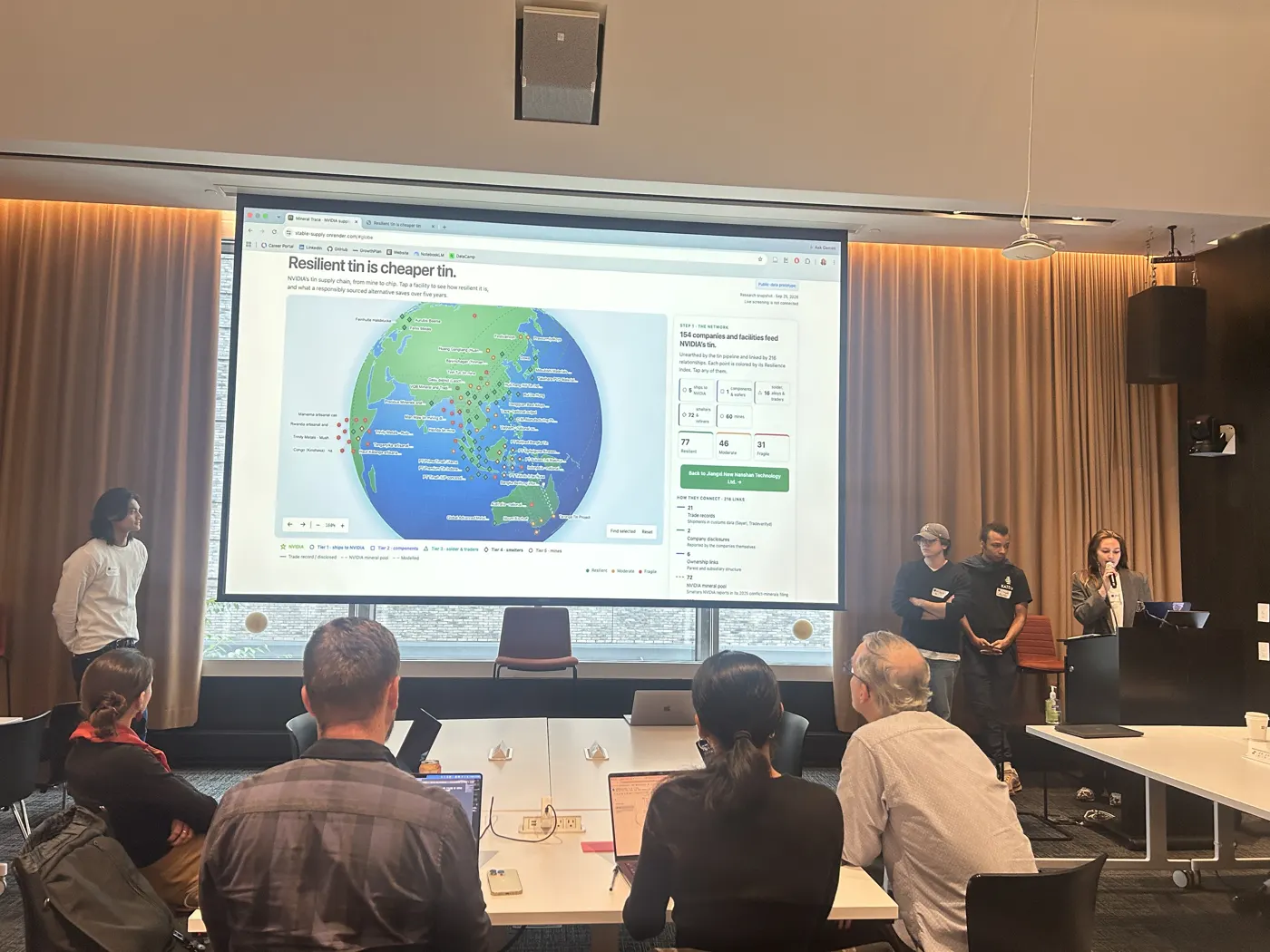
    As we presented our project to the room of hackers and panel of judges, we clicked through facilities with poor scores and modeled the profitability of their continued use vs the costs associated with switching to the closest relevant supplier with a more sustainable workflow over the course of five years. Our model let us adjust for how much of NVIDIA’s tin really originated in the facility, showcased how much a disruption of it would cost NVIDIA and how it related to others on the same branch of the whole supply tree.

    Eleonora presenting at a podium while the Stable Supply globe is projected behind the team, headed “Resilient tin is cheaper tin.”
    Presenting Stable Supply: “Resilient tin is cheaper tin.”

    We waited with baited breath for the judges to declare the winners… and cheered as Stable Supply, our team, was among them. The judges awarded us second place for putting a dollar amount on sustainability, in an effort to appeal to firms like NVIDIA in an effective manner - by invoking the bottom line.

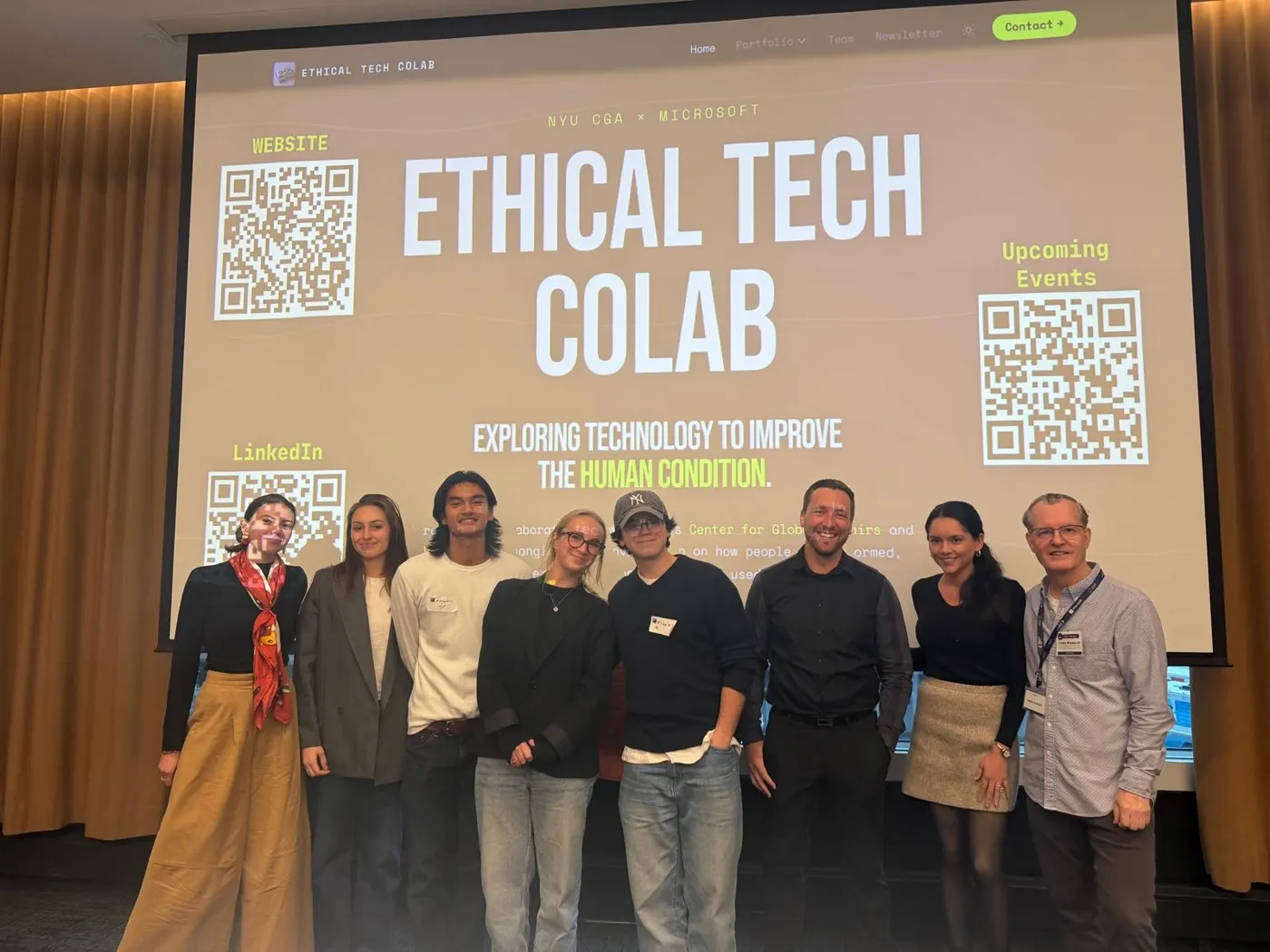
    The team with others in front of a screen reading Ethical Tech Colab, NYU CGA × Microsoft.
    In front of the Ethical Tech Colab (NYU CGA × Microsoft) screen.
    My part
    • Modelled NVIDIA’s tin supply chain: built the dataset from its 2026 smelter and refiner list, with year-on-year additions and removals
    • Matched tin smelters to facility IDs so each appears once on the map, with its source
    • Added the tin layer to the globe and supplier graph
    Tools
    Public filings · Data pipeline · JavaScript · D3 · Git and GitHub
    Team
    With Nicholas, Madeleine, Alex, Isayah and Ori

    What I took awaySupply chain dynamics do not receive the attention they deserve. I’m convinced supply chains will become a more central field of study and research.

Events

  1. Citations, Hallucinations and ML Machinations

    The first Legal Engineers NYC session gave several AI tools the same task, a client letter on state AI regulation, and then checked every legal citation they produced.

    New York, NY

    I built the tool the room used to do the checking. Paste in each tool’s letter and the page pulls out every citation (bills, cases, code sections, named acts, executive orders) and compares it against a small verified set of state AI laws and cases.

    Green means the citation matches, red means a detail is wrong, amber means it is out of date, and grey means it is not in the set. The room then looked up every grey citation and recorded a verdict: accurate, wrong detail, outdated or invented. A final table compared how each tool held up.

    The checking is rule-based on purpose. There is no AI in it, so the result is the same every time and anyone can see why a citation was flagged.

    My part
    • Designed and built the citation checker
    • Compiled and summarised the verified set of about 30 state AI laws and cases from primary sources
    Tools
    HTML and JavaScript · Pattern-based extraction · Primary legal sources
    The tool as used in the room. Paste in any AI-written letter to check its citations; verdicts stay in your browser.Open full screen

    What I took awayGrey means unverified, not invented. Keeping those two apart is the whole discipline of checking AI output.

  2. Debt, Markets, and Modern Finance: Robin Wigglesworth

    Robin Wigglesworth’s Financial Times article calling the repo market the dark matter of the financial system is what started my repo-market model. This time I got to hear him in person.

    New York, NY

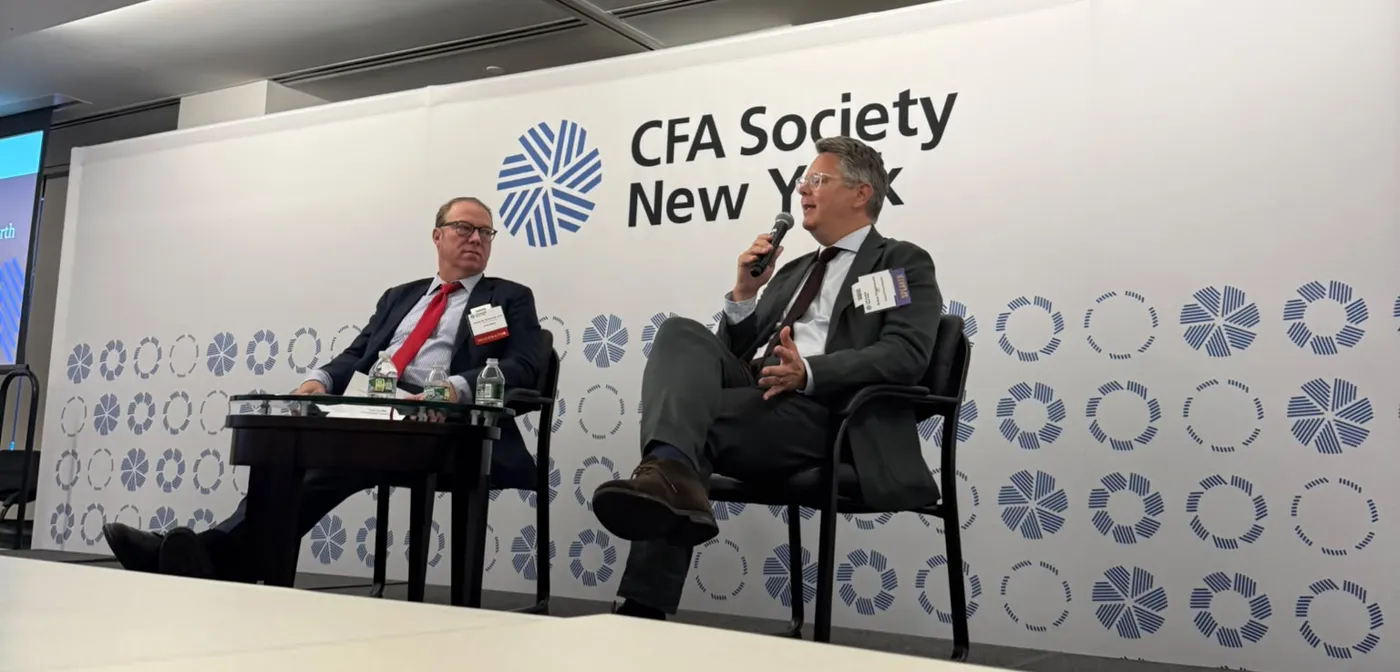
    Robin Wigglesworth speaking into a microphone beside the moderator, on stage in front of a CFA Society New York backdrop.
    Robin Wigglesworth in conversation at CFA Society New York.

    The conversation centred on his new book, A Fabulous Debt: The Epic Story of How Bonds Built the Modern World, and its argument that bonds are the most important market in the world and among the least understood.

    The repo market is that argument in miniature: the overnight lending that keeps Treasury bonds moving is enormous, essential and almost invisible until it breaks, as it did in September 2019. That invisibility is why I set out to forecast its stress days, and it was a good reminder that the question I am modelling started as a piece of journalism.

Certificates and languages

  1. Sep 2025 – Feb 2026

    Lawtomation and PwC: AI and the Law Program

    IE University and PwC

    • How AI is changing legal practice: its challenges, opportunities, risks, and benefits.
  2. Mar 2026

    Mathematics for Machine Learning: Linear Algebra

    Imperial College London

    • The linear-algebra foundations of machine-learning methods.
  3. Certified

    SIELE Spanish, C1

    Instituto Cervantes

    • Overall level C1, with C1 in written expression.
  4. In preparation

    Certifications underway

    • IAPP CIPP/US (U.S. private-sector privacy)
    • Microsoft PL-300 (Power BI Data Analyst)
  5. Languages

    Languages

    • Swedish, English, and German / Swiss German (native) · Spanish (full professional, SIELE C1) · French (limited working)